Is G1 longer than S phase?
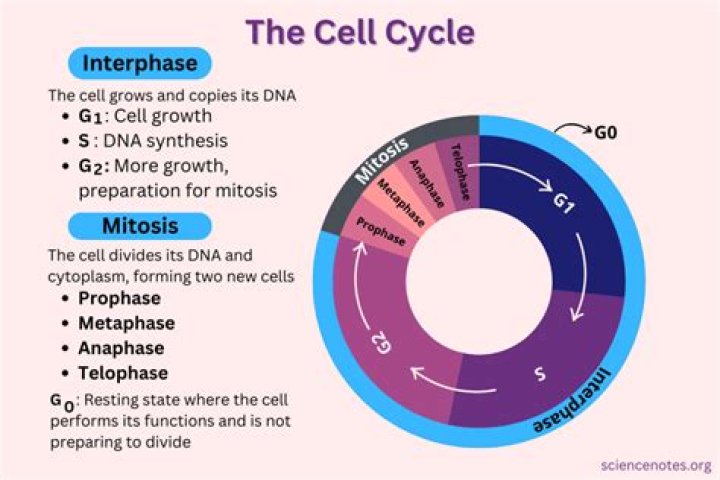
For a typical rapidly proliferating human cell with a total cycle time of 24 hours, the G1 phase might last about 11 hours, S phase about 8 hours, G2 about 4 hours, and M about 1 hour. Other types of cells, however, can divide much more rapidly.
What is the longest phase of the cell cycle and why?
Interphase is the longest part of the cell cycle. This is when the cell grows and copies its DNA before moving into mitosis. During mitosis, chromosomes will align, separate, and move into new daughter cells.
Which part of interphase is longest?
S Phase (Synthesis of DNA)
The synthesis phase of interphase takes the longest because of the complexity of the genetic material being duplicated.
Which phase of mitosis is longest?
The longest phase of mitosis is the prophase.
Why G1 Phase Is Longest?
Why does interphase take the longest?
The synthesis phase of interphase takes the longest because of the complexity of the genetic material being duplicated.
What is the longest and shortest phases of mitosis?
Prophase has longest duration, while anaphase has the shortest duration.
Which phase is longest?
Interphase is the longest phase in a cell's life cycle.
Which phase is longest phase of cell?
Interphase is the longest part of the cell cycle. In this phase of the cell cycle, the cell grows, develops and makes copies of its own DNA.
Which one is the longest phase of cell cycle between G and G?
Interphase is the longest phase of the cell cycle. Cell growth is central to the cell cycle, and this is the primary purpose for interphase.
What happens in G1 phase?
Initially in G1 phase, the cell grows physically and increases the volume of both protein and organelles. In S phase, the cell copies its DNA to produce two sister chromatids and replicates its nucleosomes. Finally, G2 phase involves further cell growth and organisation of cellular contents.
Which stage of mitosis lasts the longest explain why this stage might take more time than the others to complete?
Sample answer: Interphase lasts the longest. During this time, the cell completes all the activities that are necessary to prepare it to divide again, as well as its normal activities. Division is only one of many things a cell does, so it makes sense that this phase would be the longest.
What is the longest phase of the cell cycle quizlet?
Interphase is the longest phase of the cell cycle, involving growth, development, and repair, but not including cell division. Cytokinesis, the division of cytoplasm, occurs immediately after mitosis. Once complete, the two daughter cells are totally separate. You just studied 18 terms!
What is the longest lasting phase of the prokaryotic cell cycle?
Interphase: The longest-lasting phase of the cell cycle in which a cell performs the majority of its functions, such as preparing for nuclear division and cytokinesis.
Which cell cycle is the shortest?
Mechanism
- The mitotic phase is usually the shortest part of any cell cycle. ...
- Throughout mitosis, certain checkpoints are essential to the continuation of the process. ...
- There are three main checkpoints in mitosis, and those include the G1/S checkpoint, G2/M, and metaphase/ anaphase checkpoint.
What is the difference between G1 and G2?
G1 phase is the first phase of the interphase of the cell cycle in which cell shows a growth by synthesizing proteins and other molecules. G2 phase is the third phase of interphase of the cell cycle in which cell prepares for nuclear division by making necessary proteins and other components.
Which one is the longest phase in prophase of meiosis?
The longest phase of Meiosis I is Prophase I and it has 5 subphases namely,
- Leptotene.
- Zygotene.
- Pachytene.
- Diplotene and.
- Diakinesis.
Is G1 the longest phase of cell cycle?
G1 is typically the longest phase of the cell cycle. This can be explained by the fact that G1 follows cell division in mitosis; G1 represents the first chance for new cells have to grow. Cells usually remain in G1 for about 10 hours of the 24 total hours of the cell cycle.
Which cells may spend the most time in interphase?
2 Answers. Majority of eukaryotic cells spend most of their time in interphase.
Why is prophase the longest phase?
The longest phase of mitosis is prophase. During prophase, which occurs after G2 interphase, the cell prepares to divide by tightly condensing its chromosomes and initiates mitotic spindle formation. The chromatin fibers condenses into discrete chromosomes. The nucleolus also disappears during early prophase.
Why is interphase the longest phase quizlet?
Interphase is the longest phase because the cell has to grow throughout, duplicate DNA, and prepare to go through mitosis. The result of uncontrolled cell growth.
What is the longest phase of mitosis quizlet?
The first and longest phase of mitosis, prophase can take up to 50 to 60 percent of the total time required to complete mitosis. During this phase, the chromosomes become visible. The centrioles located in the cytoplasm near the nuclear envelope, separate and take up positions on opposite sides of the nucleus.
What happens during G1 phase quizlet?
What happens during the G1 phase? The cell prepares for division and copies organelles.
Why is G1 phase important?
The G1 phase is often referred to as the growth phase, because this is the time in which a cell grows. During this phase, the cell synthesizes various enzymes and nutrients that are needed later on for DNA replication and cell division.
What is G1 interphase?
The G1 phase, gap 1 phase, or growth 1 phase, is the first of four phases of the cell cycle that takes place in eukaryotic cell division. In this part of interphase, the cell synthesizes mRNA and proteins in preparation for subsequent steps leading to mitosis.